What Are You Looking For?
99.9% Niobium Biboride(NbB₂) Cas No.12007-29-3
Product Features
High melting point: Melting point approx. 3050 °C; classified as UHTC, suitable for extreme high-temperature environments.
High hardness: Excellent hardness and wear resistance, ideal for superhard materials and wear-resistant coatings.
Metallic-like electrical conductivity: Good electrical and thermal conductivity, combining ceramic high-temperature resistance with metallic conductivity.
Molten-metal corrosion resistance: Resists chemical attack by molten metals for metallurgical and nuclear-industry applications.
Superconductivity: Exhibits superconducting properties for research and practical superconducting-material applications.
Irradiation resistance: Retains structural stability under irradiation, applicable to nuclear-waste treatment and nuclear engineering.
High purity: Purity up to 99.99 %; no impurity phases identified by XRD.
Narrow particle-size distribution: Follows standard normal distribution without bimodal/multimodal behaviour or tailing.
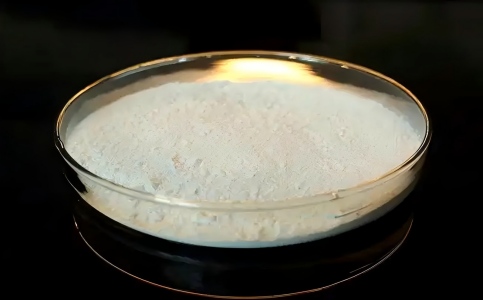
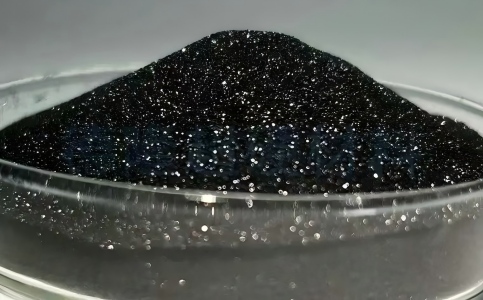
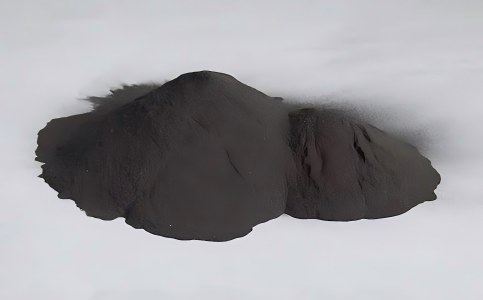
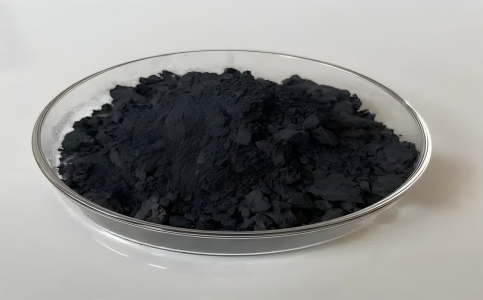
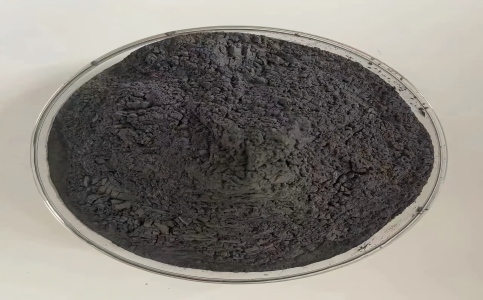
Appearance: Dark-grey powder with irregular morphology; density approx. 6.97 g/cm³.
Basic Parameters of Niobium Diboride (NbB₂)
| Item | Value |
| Product Name | Niobium Diboride (NbB₂) |
| CAS No. | 12007-29-3 |
| Crystal Structure | Hexagonal system |
| Melting Point | ca. 3050 °C |
| Density | ca. 6.97 g/cm³ |
| Morphology | Irregular |
| Colour | Dark-grey |
BoronHub Enterprise Specifications for Niobium Diboride
| Model | Mean Particle Size (D50) | Purity (%) | O (%) | N (%) | C (%) | B (%) |
| BHND995 | 1.0-3.0 μm | >99.5 | ≤0.5 | ≤0.05 | ≤0.10 | 18.2-18.8 |
| BHND999 | -325 mesh | >99.9 | ≤0.3 | ≤0.05 | ≤0.10 | 18.2-18.8 |
Note: Customized production is available upon customer request.
Impurity Content (wt%)
| Element | Maximum | Typical Value |
| Al | 0.0010 | 0.0005 |
| As | 0.0010 | 0.0005 |
| Bi | 0.0003 | 0.0001 |
| Ca | 0.0015 | 0.0006 |
| Cd | 0.0005 | 0.0001 |
| Co | 0.0005 | 0.0001 |
| Cr | 0.0050 | 0.0020 |
| Cu | 0.0003 | 0.0001 |
| Fe | 0.0500 | 0.0300 |
| K | 0.0020 | 0.0010 |
| Mg | 0.0020 | 0.0010 |
| Mn | 0.0010 | 0.0005 |
| Mo | 0.0030 | 0.0015 |
| Na | 0.0020 | 0.0005 |
| Ni | 0.0050 | 0.0030 |
| Ta | 0.0030 | 0.0010 |
| P | 0.0010 | 0.0005 |
| Pb | 0.0003 | 0.0001 |
| S | 0.0010 | 0.0005 |
| Sb | 0.0020 | 0.0010 |
| Si | 0.0050 | 0.0030 |
| Sn | 0.0003 | 0.0001 |
| Ti | 0.0050 | 0.0020 |
| V | 0.0050 | 0.0010 |
BoronHub Product Advantages & Service Highlights
High-purity assurance: Purity up to 99.99 % with no XRD-detectable impurity phases to guarantee consistent material performance.
Precisely controlled particle size: Micron-grade, sub-micron-grade and custom particle-size options to satisfy diverse process requirements.
Batch-to-batch consistency: Rigorous quality-management system ensuring stable and reliable performance across production batches.
Professional testing support: ICP-MS, XRD and other analytical instruments in-house; full Certificate of Analysis (COA) supplied for each batch.
Compliant export: In-depth familiarity with dual-use-item export-control regulations; compliant supply solutions for civilian end customers.
Customization service: Tailored particle size, purity and packaging according to customer specifications.
Technical support: Material-selection consultation, application advice and sample-testing assistance to accelerate customer validation cycles.

What are the Application Fields & End-Uses of Niobium Biboride(NbB₂)?
1. Aerospace & Ultra-High-Temperature Ceramics (UHTCs)
Thermal-protection systems for hypersonic vehicles: Deployed on leading edges, nose cones and wing leading edges. Retains structural integrity under aerodynamic heating exceeding 2000 °C by virtue of its 3050 °C melting point and excellent high-temperature strength, alongside oxidation and thermal-shock resistance.
Rocket-propulsion systems: Applied for nozzle throat inserts, combustion-chamber liners and thrust-chamber coatings to withstand high-temperature-gas erosion and chemical corrosion, extending engine service life.
UHTC composite materials: Key constituent phase compounded with silicon carbide, zirconium carbide and others for structural components operating in extreme environments, such as thermal-protection tiles and re-entry-vehicle nose cones.
2. Nuclear Engineering & Nuclear-Waste Treatment
Nuclear-waste-treatment equipment: Lining materials for nuclear-waste containers and corrosion-resistant components for high-temperature processing equipment, leveraging irradiation stability and molten-metal-corrosion resistance for long-term safe operation.
Nuclear-reactor components: Radiation-resistant, high-temperature-resistant structural parts such as control-rod guide tubes and core supports to enhance nuclear-facility safety and service lifetime.
3. Electronics & Microelectronic Manufacturing
Microelectronics: Conductive layers, diffusion-barrier layers and electrode materials in semiconductor fabrication to improve device reliability.
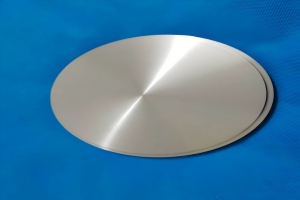
High-precision sputtering targets: Fabricate functional thin-films for optoelectronic equipment, Thin-Film Transistors (TFTs) and display panels, meeting high-purity sputtering requirements.
Electron-emission & electrode materials: Good electrical conductivity and high-temperature stability for electron-gun electrodes, field-emission devices and vacuum-electronic components.
4. Superconducting Materials
Superconducting-material research: Precursor for superconducting thin-films, superconducting wires and experimental superconducting components supporting fundamental superconductivity research.
Superconducting magnets & power transmission: Raw feedstock for superconducting magnets, power-transmission cables and high-sensitivity magnetic-field detectors.
5. Fine Ceramics & Hard Materials
Fine-ceramic feedstock: Manufacture high-temperature conductive ceramics, wear-resistant ceramics and special functional ceramics; improves electrical conductivity and thermal-shock resistance.
Hard-alloy additive: Produce ultrafine-grained hard alloys, boosting wear resistance and hot hardness for cutting tools and dies.
Gold-brazing-filler raw material: Component of gold brazing fillers for high-temperature brazing processes used in aerospace and electronic packaging.
6. Industrial Wear-Resistant & High-Temperature Components
High-temperature refractory materials: Furnace linings, refractory bricks, crucibles and thermocouple protection tubes resisting molten-metal and high-atmosphere attack.
Electrodes & heating elements: High-temperature electrodes and heating elements for vacuum furnaces, induction furnaces and other high-temperature equipment.
Wear-resistant mechanical parts: Seal rings, nozzles, bearings, dies and other high-wear components for pumps and valves to substantially extend service life.
7. Composite Materials & Scientific Research
Reinforcement for metal-matrix composites: Reinforcing phase for aluminium-matrix, titanium-matrix and copper-matrix composites to increase hardness, wear resistance and high-temperature strength.
Ceramic-matrix-composite additive: Enhances ceramic toughness, electrical conductivity and thermal-shock resistance.
R&D of new materials: Laboratory synthesis and investigation of UHTCs, hard alloys and boride functional materials to support cutting-edge-materials research.
Storage Conditions
Store under vacuum-sealed packaging in a cool, dry warehouse. Keep away from moisture, dilute acids and strong oxidising agents. Store at ambient temperature away from direct light. Use promptly once opened.
 Product categories