What Are You Looking For?
Boron Carbide Market to Hit USD 285.6 Mn by 2033, Driven by Demand for Light-Weight Armor, Abrasives & Advanced Ceramics
11:22 AM CET, 10 September 2026 | Chemicals & Materials News Source: Persistence Market Research
Boron Carbide Market Overview
Spurred by rising demand for high-performance materials across abrasives, defence, advanced ceramics and nuclear-energy sectors, the global boron carbide market is expanding steadily. According to Persistence Market Research, the market is projected to reach USD 181.4 million in 2026 and USD 285.6 million by 2033, representing a CAGR of 6.7 % from 2026 to 2033. Back in 2020, the market stood at USD 132.3 million, which demonstrates sustained growing demand for boron carbide thanks to its exceptional hardness, durability and functional properties.
Mounting demand for advanced materials for both industrial and strategic applications further fuels market expansion. Abrasive-grade boron carbide dominates the marketplace and is expected to account for roughly 47 % of market share in 2026. Powder is the leading product form, capturing approximately 58 % of total market share. The Asia-Pacific region leads the global market and is forecast to hold 51 % market share in 2026, supported by expanding manufacturing capacity and robust demand from key end-user industries.
Report Key Highlights
Global boron carbide market size: USD 181.4 million for 2026, projected to reach USD 285.6 million by 2033; CAGR 6.7 % (2026 2033).
2020 market valuation at USD 132.3 million, signalling consistent demand growth for boron carbide materials.
Asia Pacific is the top regional market, estimated to take 51 % market share in 2026.
Abrasive grade remains the dominant grade, expected to represent ~47 % of revenue share in 2026.
Powder is the primary physical form, holding ~58 % revenue share in 2026.
New market opportunities worth USD 104.2 million are expected to emerge between 2026 and 2033.
Advanced Applications Boost Boron Carbide Demand
Growing appetite for high-performance materials opens up new opportunities for boron carbide across a wide range of specialised end-uses. Abrasive applications remain especially critical, as reflected by the leading market position of abrasive-grade boron carbide. Its well-established track record in demanding industrial use-cases underpins ongoing market growth.
Advanced-ceramics applications are emerging as another high-growth segment. In March 2025, ESK Ceramics (a 3M subsidiary) announced its new ultrafine Boron Carbide powder (D50 < 0.8 μm) had obtained certification for advanced sintering processes used in next-generation armour ceramics. This powder is developed targeting NATO armour-procurement programmes and underscores the vital role of specialty powder grades in cutting-edge applications.
Nuclear-energy and defence applications unlock fresh market opportunities. Boron carbide continues to gain traction for nuclear-related and defence-grade deployments, where its unique material properties satisfy stringent operating requirements. Industry trends show that buyers are placing greater emphasis on supply capacity and qualified boron carbide grades for strategic applications.
In September 2024, a leading Chinese manufacturer commissioned a new boron-carbide synthesis production line with an annual capacity of 800 tonnes. The line is built to satisfy domestic procurement requirements for nuclear reactors and defence projects, highlighting the strategic importance of regional production capacity.
In January 2024, Höganäs AB signed a strategic supply agreement with a European small-modular-reactor (SMR) developer to deliver nuclear-grade boron-carbide powder for control-rod assemblies. This deal gives Höganäs AB a first-mover advantage within the SMR materials supply chain and illustrates the rising significance of boron-carbide powder in nuclear applications.
Powder-Form Boron Carbide Drives Market Expansion
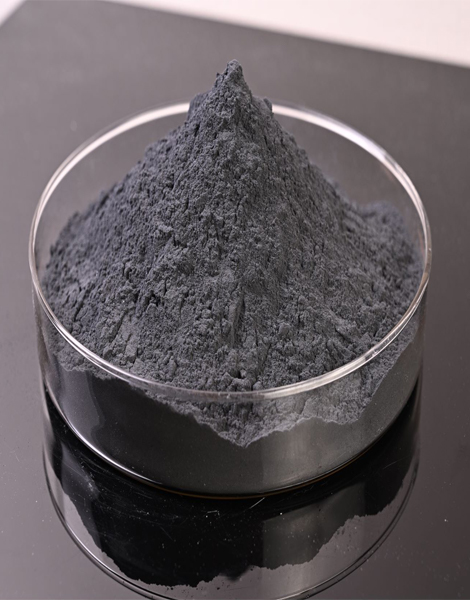
Powder-form boron carbide is the dominant product form worldwide, forecast to account for around 58 % market share in 2026. Its strong market standing stems from broad utilisation in material processing, advanced ceramics, abrasive manufacturing and specialty component fabrication.
Ongoing advances in ultrafine-powder and nuclear-grade grades further stress the commercial importance of tailored product specifications. As manufacturers and end users source materials engineered for extreme-condition applications, boron-carbide powder will remain central to market evolution.
Abrasive-Grade Boron Carbide Maintains Market Dominance
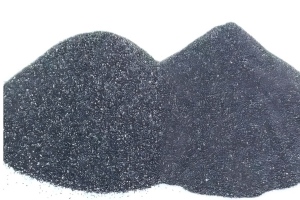
Abrasive-grade boron carbide is projected to hold approximately 47 % revenue share in 2026, making it the leading product grade. This position mirrors boron carbide’s core function within abrasive processing and industrial-material machining.
Combination of steady mature abrasive demand plus fast-rising advanced-application demand creates a broad foundation for market growth. Continuous product development opens new commercial avenues for suppliers catering to both conventional and highly-specialised requirements.
Key Market Drivers
Rising consumption of boron carbide for abrasive-processing applications
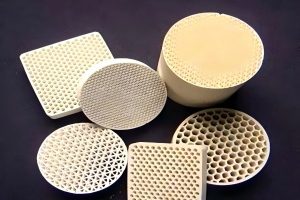
Growing adoption of advanced ceramic materials
Surging demand for specialty powder grades
Expanding deployment of boron carbide within nuclear reactors
Increased defence-sector procurement volumes
R&D progress for next-generation armour ceramics
Higher consumption volumes for nuclear-grade boron-carbide powder
Strengthened supply capacity for strategic critical materials
Competitive Landscape
The global boron carbide market consists of well-established manufacturers and specialty-material suppliers serving abrasives, ceramics, nuclear power, defence and other industrial verticals. Product quality, production throughput, custom specialty grades, powder particle-size characteristics and reliable supply capacity constitute core competitive factors.
Recent milestones including ultrafine-powder certification, newly-commissioned synthesis capacity and nuclear-grade supply contracts confirm expanding market demand for high-end specialty-application materials. Market participants are solidifying their footprint via product development for advanced-ceramic, defence and nuclear-energy end-uses, paired with expanded production and delivery capabilities.
Market Segmentation
Grade: Abrasive-grade, Nuclear-grade, Refractory-grade, Others
Form: Powder, Granules, Paste
End-use Industry: Aerospace & Defence, Industrial Manufacturing, Nuclear Power, Automotive, Mining & Metallurgy, Electronics & Semiconductors, Medical, Others
Regional Insights
Asia-Pacific
The Asia-Pacific region leads the global boron-carbide market and is expected to capture 51 % market share in 2026. Its leading position is backed by expanding manufacturing capacity together with healthy demand across nuclear-energy, defence, abrasive and advanced material sectors.
The new 800-tonne-per-annum boron-carbide synthesis line commissioned in China during September 2024 further demonstrates regional capacity expansion. This production facility serves domestic nuclear-reactor and defence-procurement requirements.
Europe
Europe represents a substantial boron-carbide market, covering advanced-materials, nuclear-technology, defence and abrasive-processing applications. Supply chains for nuclear grade materials keep evolving across the region.
In January 2024, Höganäs AB entered a strategic supply partnership with a European SMR developer to supply nuclear-grade boron-carbide powder for control-rod assemblies. This development highlights boron carbide’s promising role within emerging SMR-related material supply chains.

North America
North America remains an important regional market, driven by demand for advanced ceramics, abrasives, defence grade products and custom specialty boron-carbide materials. The region is heavily engaged in R&D for next-generation armour ceramics.
In March 2025, ESK Ceramics (3M subsidiary) announced its newly-developed ultrafine boron-carbide powder (D50 < 0.8 μm) obtained formal certification for advanced sintering for next-generation armour ceramics, targeting NATO armour-sourcing projects.
FAQ
Q1. What is the projected boron-carbide market size by 2033? The global boron carbide market is forecast to reach USD 285.6 million by 2033, up from USD 181.4 million in 2026.
Q2. What CAGR is projected for the boron carbide market? A CAGR of 6.7 % is expected over 2026-2033, generating incremental market opportunities worth USD 104.2 million across the forecast horizon.
Q3. Which region dominates the boron-carbide marketplace? Asia-Pacific ranks as the leading regional market, projected to hold 51 % share in 2026, driven by nuclear-energy, defence, abrasive and advanced-material demand.
Q4. Which grade holds dominant market share? Abrasivegrade boron carbide is the leading grade with ~47 % projected revenue share in 2026, owing to widespread abrasivesector utilisation.
Q5. Which physical form captures the largest market share? Powder form leads with approximately 58 % revenue share forecast for 2026. Powdertype boron carbide is widely deployed for abrasives, advanced ceramics, nuclearenergy and other specialty applications.
Future Outlook & Growth Opportunities
The global boron-carbide market is set for sustained expansion, rising from USD 181.4 million (2026) to USD 285.6 million (2033) at a CAGR of 6.7 %. Incremental market opportunities totalling USD 104.2 million reflect rising demand from both established and newly-emerging application fields.
Abrasive-grade and powder-form boron carbide will remain key market segments. Meanwhile advanced ceramics, defence, nuclear-power and SMR-related applications unlock new commercial potential for specialty-specification boron carbide. The Asia-Pacific region will keep its leading position (51 % market share projected in 2026), while Europe and North America stay vital markets for high-performance strategic-material applications.
Progress in ultrafine-powder development, newly-added production capacity and nuclear-grade supply contracts demonstrate the market shift toward highly-customised boron-carbide products. As manufacturers innovate material performance to satisfy extreme-condition requirements, boron carbide will continue to play a pivotal role within global industrial and strategic material supply chains.
Press release distributed via openPR.
Scan to wechat :

Scan to Whatsapp :

home
products
Contact Us
 Product categories