What Are You Looking For?
Taiwan’s Tsing-Hua University Achieves First-in-Taiwan BNCT Treatment for Breast Cancer with Noticeable Tumor Shrinkage
August 27, 2026 | Reported by Wang Junjie, United Daily News, Hsin-chu Real-time Report
National Tsing-Hua University (Taiwan) has expanded Boron Neutron Capture Therapy (BNCT) application from brain and head-and-neck cancers to breast cancer, forming Taiwan’s first research team to successfully administer BNCT for breast-cancer patients. Collaborating with Taipei Veterans General Hospital and Far Eastern Memorial Hospital, the University’s Institute of Nuclear Science and Technology has completed compassionate-use BNCT treatments for five patients with recurrent triple negative breast cancer. Follow-up observations reveal significant tumor shrinkage and minimal damage to surrounding healthy tissues, yielding encouraging therapeutic outcomes.
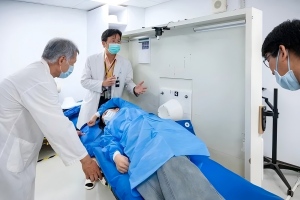
Dr. Chen Yi-Wei, Director of Radiation Oncology at Taipei Veterans General Hospital, a long-term collaborative partner of the University, notes that breast cancer has a large patient population and substantial unmet medical demand. Tumor cells exhibit high heterogeneity, leading to variable patient responses to standard therapies. Triple-negative breast-cancer cells lack estrogen, progesterone and HER2 receptors; hence hormone therapy and anti-HER2 targeted agents are ineffective. Patients face limited treatment options and high recurrence risk, creating urgent demand for innovative therapeutic modalities.
Dr. Chen explains that BNCT is a targeted radiation therapy characterized by low side-effect profiles and potent tumor destruction efficacy. Patients are first injected with boron-containing pharmaceuticals that selectively accumulate inside tumor cells, followed by neutron-beam irradiation. Upon neutron capture by boron atoms, high-energy particles are generated, destroying cancer cells within a range roughly equivalent to the size of a single human cell.
BNCT therapeutic efficacy hinges on sufficient uptake of boron-agent by tumor tissue, alongside high-quality, stable neutron-beam output. Long-term research progress by the Tsing-Hua team in boron-drug development and neutron-irradiation technology lays the critical foundation for BNCT deployment against breast cancer.
Joint research from Tsing-Hua University and Taipei Veterans General Hospital on BNCT for recurrent breast-cancer patients with brain metastases has been published in the international journal Advances in Radiation Oncology. Published clinical case data demonstrates shrinkage of irradiated brain-metastatic breast-cancer lesions, with relief in some patients from symptoms including pain, weakness and gait disturbance.
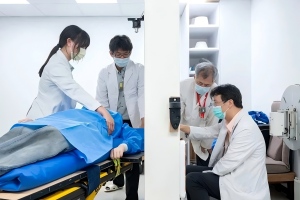
BNCT currently serves as a local salvage therapy rather than a replacement for surgical intervention or systemic pharmacotherapy. The research team aims to accumulate adequate case data and long-term follow-up records to advance formal human clinical trials for breast-cancer BNCT.
Pei Jin-Che, Nuclear Engineer at the Institute of Nuclear Science and Technology, points out that Tsing-Hua University’s THOR pool-type research reactor is Taiwan’s sole operational research nuclear reactor, safely in service for more than 60 years. Accelerator-based BNCT systems generate neutrons by bombarding target materials with charged particles, which brings engineering challenges including vacuum-environment maintenance and target-material heat dissipation. In contrast, the THOR reactor delivers continuous, high-volume neutron beams of consistent quality and requires shorter patient irradiation sessions.
The Tsing-Hua Neutron Irradiation System completed its first BNCT irradiation in 2010 and obtained medical-device certification from Taiwan’s Ministry of Health and Welfare in 2023. Cumulative human trials and compassionate-use treatments have exceeded 700 patient sessions. Apart from facilities in Japan, this represents one of the world’s highest-volume BNCT clinical sites, drawing patients globally seeking BNCT intervention.
The cross-disciplinary research team at the Institute of Nuclear Science and Technology has maintained over 20 years of close collaboration. Professor Chou Feng-Ying, known as “the Mother of BNCT”, leads boron-containing pharmaceutical R&D and attends each BNCT treatment session in-person. Dr. Pei Jin-Che, a Grade-1 licensed nuclear engineer, oversees treatment-plan formulation. Dr. Chen Yi-Wei from Taipei Veterans General Hospital manages patient screening and full-cycle clinical efficacy follow-up. Multiple physicians and university subject-matter experts are integrated within the group. Medicine, pharmaceutical science and nuclear-engineering expertise are tightly coordinated to implement precise, rigorous BNCT clinical workflows.
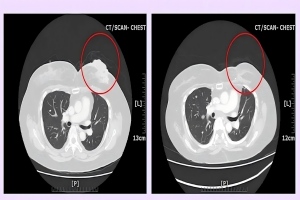
Tsing-Hua’s BNCT program runs dual tracks of formal human clinical trials and emergency compassionate-use treatment. Among 437 retrospective compassionate-use cases reviewed, the overall objective response rate (ORR) reached 70.2 %, meaning complete tumor resolution or marked shrinkage occurred in roughly 7 out of 10 patients. For head-and-neck-cancer subgroups, the objective response rate climbs as high as 80 %. Clinical data validates strong local-tumor-control potential for Tsing-Hua-implemented BNCT, offering an additional therapeutic alternative for patients failing conventional regimens.
The research group continues to develop novel boron-containing pharmaceuticals and corresponding treatment protocols targeting liver cancer, lung cancer and melanoma. Boroncide, a liver-cancer-targeting boron drug developed by Professor Chou Feng-Ying’s team, is undergoing pre-clinical-trial regulatory review. The University also plans to introduce next-generation Modular Micro-Reactors (MMR) to further expand BNCT research and clinical translation.
Scan to wechat :

Scan to Whatsapp :

home
products
Contact Us
 Product categories